
Resource
Things to do in the first hour of water damage
If you are standing in water, use this as a guide.
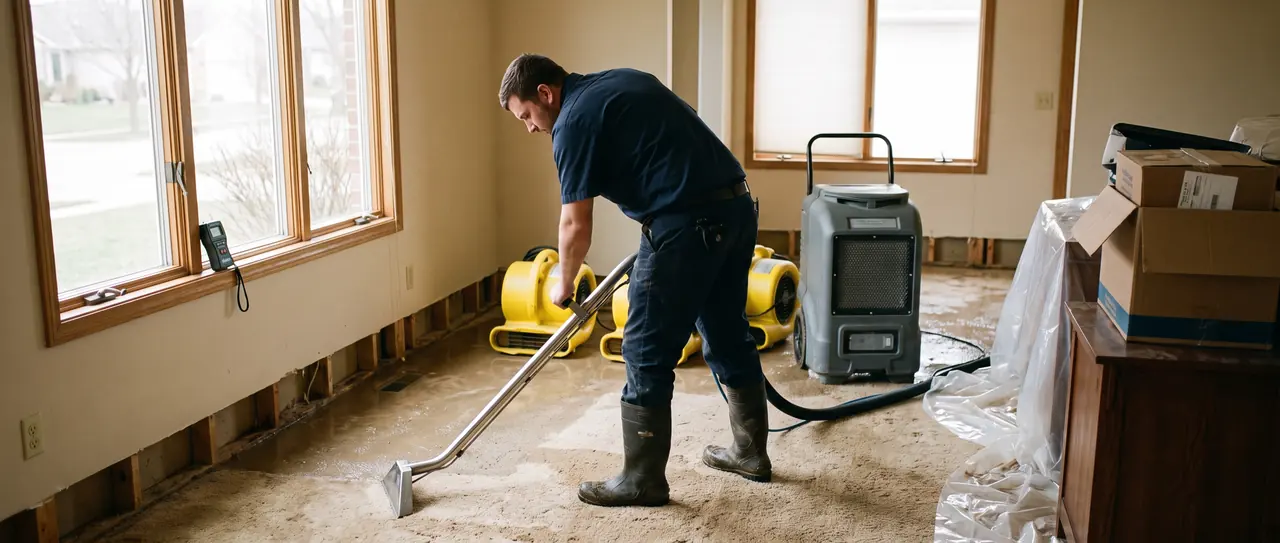
Before we get into the list, it is important for you to understand that the water isn't going to stand still while you read this. While reading, you should be working to accomplish all of these things. Don't stress, just do the best you can in the first hour.
Here is your first hour of water damage checklist
Eight steps, in order. Safety first, then stop the water, then call, then protect and document.
-
Check for electrical and sewage hazards
If the water is near any electrical items, turn off the electricity at the breaker to the rooms that are wet. Do not enter any water that is coming from a sewage source.
-
Stay clear of sagging ceilings
Do not go into rooms where the ceiling is sagging or dripping. Don't poke it to drain it. Wet drywall can come down all at once.
-
Shut off the water
Turn off the water at the main shutoff valve if the source of the water is inside the house. If it's one appliance, close the small supply valve behind it instead.
-
Call Guardian, then your insurance company
Call Guardian and then call your insurance company. Write down the claim number, the adjuster's name, and the time you called.
-
Protect what you can
Move items out of the wet rooms and raise furniture off the floor by placing the legs on blocks or foil. Pull up any loose rugs and open up cabinets in the wet area.
-
Document everything
Take pictures and video of the damage. Don't remove any wet carpet, padding, or drywall until the insurance adjuster has seen it.
-
Avoid the common mistakes
Don't use your household vacuum to remove water, don't turn on fans if the water is from a sewage source, don't pour bleach on mold, and don't tear out any walls until we tell you to. Don't turn on any electrical appliance that has been wet.
-
Clear a path for the crew
Make sure to move your cars out of the way so we can get close with our truck. Put your pets in a dry room and know where your breaker box and water shutoff are located.
Safety is the number one priority, so check for anything that might hurt you.
Electricity, sewage, and a ceiling full of water. Deal with those three before you touch anything else.
If the water has come in contact with any electrical items you should shut off the power to those rooms at your electrical panel. If you aren't sure which breakers control those rooms, just turn them all off. If you can't get to your breaker panel without walking through water, call your electric utility company.
If the water is coming from a toilet, drain or any sewage source you should stay out of it. It is full of bacteria and isn't good for you. Keep kids and pets out and don't mop it up yourself.
If you have ceilings that are dripping or have water bulging them out, you should stay out of those rooms.
How do you stop the water?
This is easy if the water is coming from an inside source. Go to your main water shutoff valve and turn it off.
Your main water shutoff is most likely at the meter box at the street or at the point that your water supply line enters your house. Turn the handle clockwise until it won't turn anymore.
If only one appliance is leaking you can just turn the water off to that appliance. Toilets have a shutoff valve right on the floor next to them, washing machines have two behind them and water heaters have one on the cold water line on top of the tank. Dishwashers and refrigerator ice makers usually tie in under the kitchen sink.
If the water is coming from the roof or from a storm you aren't going to be able to turn it off, so just do your best to get things out of the way.
Call us first, then call your insurance company.
It is important for us to get started extracting the water and drying your house before your insurance adjuster comes out. We need to take care of things now so you don't end up with mold or odors later.
Call Guardian. We're available 24/7 and a real person will answer the phone when you call. Tell us where the water came from, how many rooms are wet, and whether the power is off. That's enough to get a crew moving on water damage restoration.
Then call your insurance company to report the loss. Most insurance policies state that you must make every reasonable effort to prevent further damage to your property. That means calling a mitigation crew. Our guide to filing a water damage insurance claim in Texas covers the rest.
If the water loss was caused by a plumbing failure, call a licensed plumber to repair the plumbing. Guardian can take care of the rest.
What should you protect and document?
Move small items to a dry room, get furniture off the carpet, pull up loose rugs, open the cabinets, and take pictures and video of everything before it moves.
- Move small items to a dry room. This includes electronics, paperwork, photos, etc.
- Place furniture on blocks or foil to keep it from staining the carpet. Even wooden furniture legs can stain the carpet.
- Pull up area rugs that are not firmly attached to the floor. The dyes from the rug can bleed into the carpet.
- Open all cabinets and closet doors to allow for better air circulation.
- Take pictures and video. We recommend stepping into each room from the doorway and taking a picture of each room. Then take close-ups of the water line or water source and anything else damaged by the water.
- Write down the order of events that led to the water loss.
- Keep damaged materials for the insurance adjuster. Everything that we remove will be bagged and labeled so the insurance adjuster can look at it, if needed.
What should you not do?
Don't use a household vacuum on water, don't set up fans on a sewage loss, don't bleach mold, don't tear out walls, and don't run anything that got wet.
- Do not use a household vacuum to remove water from the floor. This can cause electrical hazards. It is OK to use a wet-rated shop vac once the power has been turned off to that room.
- Do not set up fans if the water loss was from a sewage line. This will spread contamination throughout the home.
- Do not use bleach to treat mold. The mold roots will still be present in the drywall or wood, and bleach fumes can be hazardous. Leave it for mold cleanup.
- Do not tear out walls. We will open the walls only where needed, and we will use clean cuts so that it is easier to rebuild.
- Do not run appliances that may have gotten wet.
What happens when the crew arrives?
Upon arrival, we will make sure the water source has been remedied and identify any hazards present. We will then take moisture readings and discuss our plan of action with you.
Our technician will use a moisture meter to see where the water has traveled, even if the walls or floors appear dry to the touch. We will remove as much of the water as possible using our extraction equipment, remove materials that cannot be dried, and set up air movers and dehumidifiers to dry your home. We will provide you with a daily moisture log to give to the insurance adjuster when they arrive. Most first-hour questions are about time; our guide to how long water damage restoration takes covers the timeline.