
Resource
Water damage restoration timeline: how long does it take?
Water damage restoration timelines vary wildly. While most residential water losses are dried out in 3–5 days, the time from initial damage to restoration completion can be anywhere from a week for a single room to several weeks if the loss is significant.
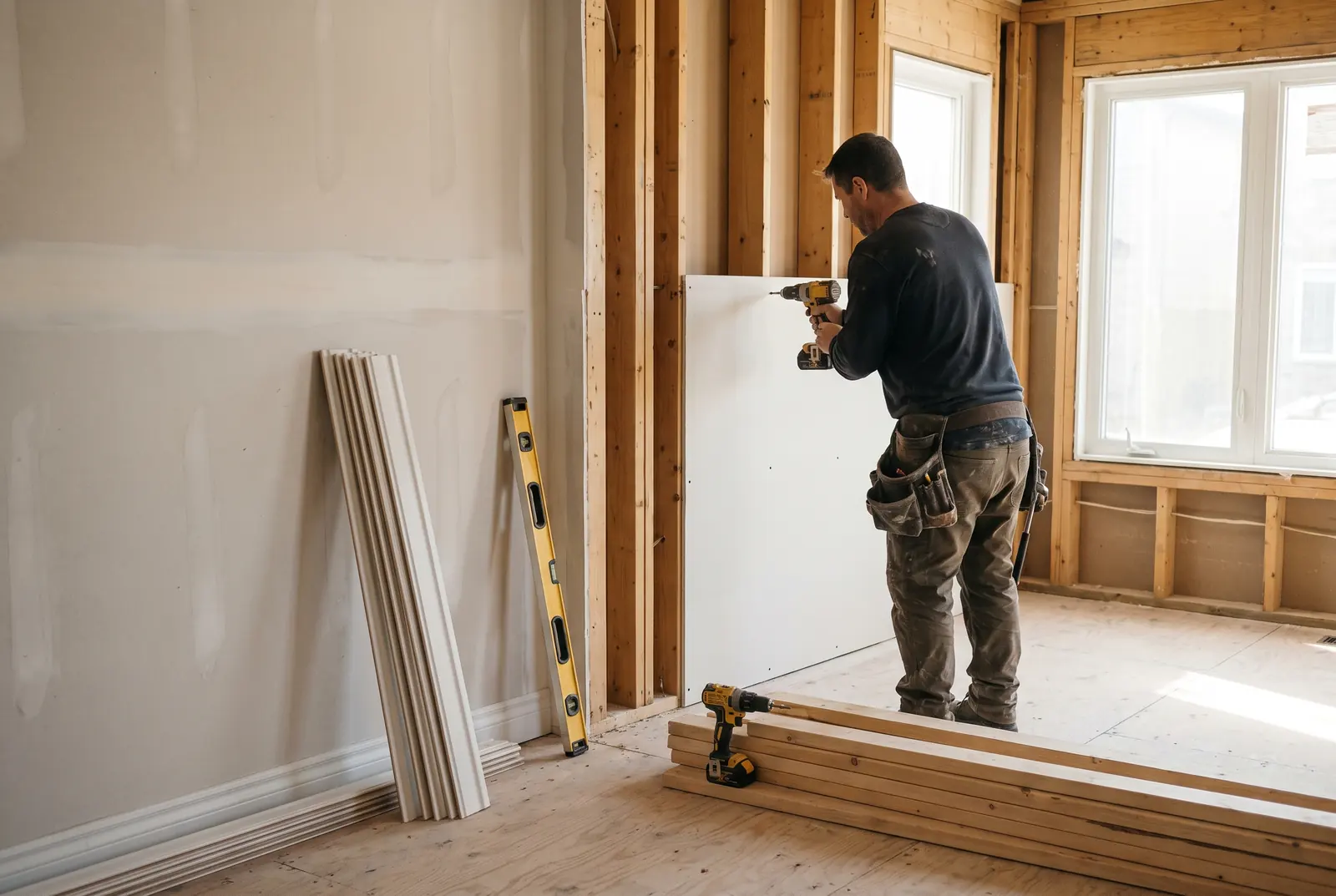
If you're dealing with water damage, it's important to know what to expect as we work through the restoration process. This guide breaks down the entire timeline of a typical residential water loss, phase by phase.
How long does water damage restoration take?
The short answer: water damage mitigation (stopping and fixing the damage) usually takes a few days, and reconstruction (repairing and replacing materials) can take anywhere from a few days to several weeks.
Below is a breakdown of the timeline of each phase of the mitigation and reconstruction process, as well as the insurance steps that happen alongside.
| Phase | Typical duration |
|---|---|
| Call and arrival at your home | As soon as possible for an active emergency |
| Inspection and moisture mapping | Same day as initial visit |
| Water extraction | A few hours |
| Removal of unsalvageable materials | Usually same or following day |
| Structural drying | 3–5 days for most residential losses; longer for dense materials |
| Monitoring and equipment removal | Daily, until structure is dried |
| Reconstruction | A few days for single-room reconstruction; longer if there is multi-room flooring or cabinets, etc. |
| Insurance steps | Multiple steps, beginning on day one |
What happens on day one of water damage restoration?
Day one usually involves a call to us, an inspection of your home, water extraction, and tear-out of unsalvageable materials. Drying equipment is running before the crew leaves.
Call and arrival. If you're experiencing an active emergency, we'll get a crew to you as soon as possible. In the meantime, do your best to stop the source of the water and move what you can. Our first-hour checklist walks through those steps.
Inspection and moisture mapping. A technician will conduct a full inspection of your home, using a moisture meter and usually a thermal camera to map out where the water has traveled in your walls, floors, and subfloor. This will act as a baseline for our Guardian team to refer back to when taking daily moisture readings.
Water extraction. Removing water from your carpet, padding, and hard-surface floors will take a few hours. The more we remove, the less your structure will need to be dried later on.
Tear-out of unsalvageable materials. Any drywall that was below the water line, carpet padding, baseboard, and insulation will usually be removed either that day or the following day. Removing the bottom section of drywall in a process we call "making a flood cut" will allow us to dry out the framing inside your wall. This process takes longer if the water was contaminated and requires additional materials to be removed. The water damage page explains how mitigation works.
How long does it take to dry out a structure?
As mentioned above, most residential water losses take three to five days to dry. However, homes with hardwood floors, plaster walls, concrete, or water damage that was allowed to sit for several days will take longer to dry.
Drying your structure requires a balance of airflow, heat, and dehumidification. Airflow is created with air movers, which blow air across the wet materials to evaporate the moisture in them. Dehumidifiers remove the moisture from your home's air and drain it away from your home.
Note: There is no fixed timeline associated with the IICRC S500 drying standard. Rather, your home must be dried to a certain standard, which is determined by the dryness of unaffected materials in your home. That's why the end of drying is decided by readings, not by the calendar.
Throughout the drying process, our Guardian team will take daily moisture readings. Once a room is dry, the equipment in that room will be removed. When the last reading is normal, all equipment will be removed, and your mitigation will be complete. Running equipment longer than needed doesn't help, and pulling it early invites mold. If materials have been sitting in water for several days before we arrive, there's a chance mold growth has begun. In that case, your technician will check for growth and bring in mold cleanup when it's needed.
Materials dry at different speeds. The order below is a general guideline, going from fastest to slowest:
- Carpet and carpet pad (often the fastest once the pad is removed)
- Drywall and framing (typically within the 3–5 day range when the wall cavity is open)
- Hardwood floors (drying time can be reduced with specialty mats, but they add days)
- Plaster, concrete, and tile mortar beds (dense and slow to release moisture)
How long will it take to rebuild my home?
How long does the reconstruction phase take? That depends on what needs to be done. Hanging, texturing, and painting drywall in one room can be done in a few days. Flooring, cabinets, or trim work in several rooms will take longer and depend on the availability of the material to be installed.
One thing is for certain. We don't start reconstruction until we know that everything is completely dried. Once we hang drywall on the framing, it's sealed in. If the framing was still wet, it can create a great place for mold to grow.
The reconstruction timeline depends on several variables, such as how much needs to be done and what materials will be needed. For example, drywall mud takes time to dry between coats. Some flooring materials need to sit in the house a certain amount of time to acclimate to the conditions before installation. And cabinets or special-order tile take time to get from the supplier. With Guardian, you won't have to switch to a different company for reconstruction like some companies make you do. We do it all. The people who did the drying are the same ones who will restore your home. That way, they know exactly what was removed and why.
How does working with my insurance company fit into the timeline?
We work with your insurance company in parallel with doing the work, not beforehand. Mitigation work begins as soon as possible.
There's no need to wait for the insurance adjuster to come out. In fact, your insurance policy will probably require you to take action to prevent further damage to your home. Just be sure to call them that day to report the claim. We'll gather all the documentation we can as we go and share it with your adjuster. Most delays customers experience are in the reconstruction phase. That's because the scope of work and the estimate need to be approved by the insurance company before materials can be ordered. Our guide to water damage restoration cost covers what the estimate includes.
What affects the timeline of my restoration?
There are several variables that affect the timeline. Best case is a clean water loss, discovered quickly, in an area of the house where there's good airflow. Worst case is a contaminated water loss, discovered after a lengthy amount of time has elapsed, in an area of the house where the materials are very dense and it's very humid.
Those variables are:
- The category of water that caused the damage. Clean supply water allows more materials to be dried in place; gray water and sewage require more removal and disinfection.
- The length of time the water was present before remediation began. Longer dwell means deeper saturation and more tear-out.
- The type of materials that water affected. Carpet and drywall dry quickly. Hardwood, plaster, and concrete do not.
- The humidity in the home (Texas summers are very humid) and the airflow in the areas where water damage occurred. Opening cavities and toe kicks speeds drying.
- Whether the source of the water was located and stopped. A slow leak that was never traced resets the clock every day.
- How quickly decisions get made about tear-out and material selections.
While you have no control over the first three, you certainly have control over how fast you call, how quickly the source is stopped, and how soon decisions are made.